News Potatoes
Rain comes too late for Polish potatoes
The recent rainfall in Poland does not come on time for all potato crops. A cold spring followed by extreme drought clearly left its mark on the cultivation. This means that the country is heading for a potato harvest with problems for the fifth year in a row.
Read this article?
Become a subscriber and get instant access
Choose the subscription that suits you


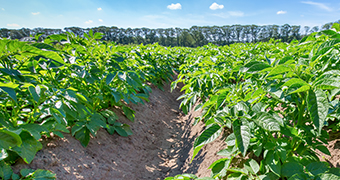
The problem of Polish potato cultivation has two faces. On the one hand, there is it area, which drops like a stone. Official figures for 2023 are just under 200.000 hectares. The sector has been in a vicious circle for about five years, with yields and returns from cultivation under pressure. Hobby potato cultivation and the cultivation of table or starch potatoes are all shrinking. This is clearly visible in the figures.
Major grower stops
The cultivation of industrial potatoes is also not protected. Growers of French fries and chips potatoes have difficulty achieving a good balance with low contract prices and high cultivation costs. Especially if the potato yield is also disappointing, that loss cannot be compensated for in the open market. It is striking - and unique in Europe - that it is precisely the large arable farmers who reduce or completely stop cultivation. This is at odds with the trend in Western Europe, where the large professional growers remain and the smaller companies stop.
Earlier this summer, the Polish statistical agency GUS assumed an average yield of 30 tons per hectare. That estimate has now been slightly adjusted downwards, bringing the total harvest to just under six million tons. That is slightly less than was harvested last year and in theory the smallest yield in ten years.
Compared to Western Europe, planting was possible in most places in Poland in April. It then remained wet and cold for a long time, which inhibited growth. Hot and dry weather followed, just like elsewhere in Europe. The differences between crops are large. Especially where irrigation is not possible. It is estimated that only 10% of the area can be irrigated.
Rain brings relief
Due to recent precipitation, it is only really dry in Central Poland. The south and southeast in particular received a lot of precipitation. This in turn causes high disease pressure and the risk of progression. A major problem is the low tuber number and this cannot change during the last rainy period. It is therefore expected that the precipitation will not cause a change in potato production.
The price level for table potatoes started the season at a record high after an empty old market and tight availability. At the beginning of August, that price level has now been halved due to increased supply, but is still relatively high from a historical perspective. The average price level is €36 per 100 kilos. That is a double compared to last year and 8% more than the old price record from 2019.
Processors
Potato processors in Poland, such as McCain, Farm Frites/Aviko and Fritar, have significantly increased their contract prices for this season. They also have to compete with chip manufacturers who are also looking for more raw materials. Especially PepsiCo, which launched a new one last month factory started in south-west Poland. The factories also face a potential potato shortage that could limit processing capacity.