Analysis Potatoes
French fries industry has more potatoes on contract
The potato processing industry rarely buys free potatoes. Contract farming and exceptionally high yields are suppressing demand for additional volume. Read more about developments in contract farming, the impact of lower capacity, and the exceptionally high processing yields.
Read this article?
Become a subscriber and get instant access
Choose the subscription that suits you


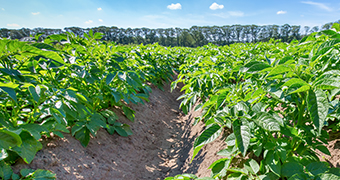
At the beginning of the contract period, the industry was still committed to further expanding the area of potatoes it wanted to grow under contract. However, when signals from French fry sales deteriorated, issuing new contracts abruptly stopped.
On balance, it appears that more acreage has been planted: less than initially planned, but still more than in previous years. Expansion efforts were particularly strong in Belgium, but processors in the Netherlands have also signed additional contracts. This explains why the industry currently has no need for free-range potatoes. It's a simple calculation: normally, 80% is grown under contract, and 20% is free-range. If capacity is reduced to, say, 90%, the need for free-range potatoes will naturally decrease.
As a result, the share of contract farming, compared to previous years, has already risen to approximately 89%. Furthermore, if the industry has secured slightly more under contract than in previous years, this percentage will even exceed 90%. This explains why the industry is currently not buying free potatoes.
High returns
Moreover, processing yields are exceptionally high, even higher than expected. Even with early potatoes, underwater weights were high, and failure rates were remarkably low. As a result, processing yields rose to just over 58% in August, according to figures from the industry association Vavi. This is 2 percentage points above the five-year average.
Ultimately, processing in August was down 4,8% compared to a year earlier. Given the particularly weak market sentiment, this represents only a small decline. Moreover, thanks to the high yields, the decline in finished goods was limited: production of consumer products shrank by only about 2,5%.