Brought to you by Bayer Crop Science
'Weed control in beets was late but good'
"After the very late and cold start, there were some concerns about the growth of the beets. But in the end it turned out quite well," says arable farmer Jan Knook from Willemstad (North Brabant). Ultimately, the results of the late weed control were also better than expected. "On one plot I went through it again with the hoe to remove some meld, but that was it."
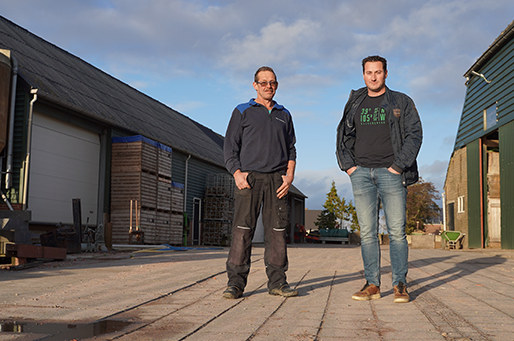
"The year has been completely different from what we were used to. This applies to the potatoes and onions, but certainly also to the sugar beets," Jan Knook opens the conversation. Together with advisor Kunard Strootman from crop protection products trade Theunisse, he looks back on the special 2023 growing season, which started late and cold and also ended very wet. "Fortunately, we were able to get the last potatoes out on October 10. That was just before it started raining and didn't stop. We harvested the beets in early November on a day when it was just a bit dry. We do have a transfer truck. regularly, to keep the land a bit tidy," the arable farmer reflects.
With almost 15,5 tons of sugar per hectare, the yield was 'above expectations'. According to him, the fact that Knook is also well above the area average is mainly due to the extensive crop rotation that he can maintain for the (4 hectares) beets. For that reason, he does not have to choose Rhizoctonia and BCA-resistant varieties, which means that the yield potential is slightly higher.
Beets sown late
Although the season ended well, Knook has not forgotten the cold and late spring. "We were only able to sow our beets on April 22. The soil was barely suitable at that time, but we persevered anyway. To compensate for the expected lower field turnout, we sowed the beets at 18 instead of 20 centimeters. Although we have so far Even though we had to wait for the first leaves in May, the growth still came in well. At the end of June you could hardly see any of the backlog."
Strootman especially remembers the extremely long sowing period. "The first beets were sown here at the end of February and the last only in the second week of May. That is more than two months in between! The very early sowing ultimately paid off. Until the beginning of May, those plants really had all the colors of the rainbow, but then they also became the best beets."
Weed control went well
Despite all the delays, weed control went reasonably well. Knook says that the soil herbicide applied a few days after sowing did not work very well, but it did provide the necessary clean-up. The first time around mid-May is with a combination of Goltix® (0,75 l/ha) + Payment Tandem (1 l/ha) + Safari® DuoActive (100 gr/ha) sprayed, also immediately Batavia (0,45/l/ha) is included against lice. The second spraying - in the first week of June - was again with Goltix, Payment Tandem and Safari DuoActive, only now with a slightly higher dosage of Goltix (1 l/ha). According to both men, this combination did an excellent job and very little manual work was required afterwards. "On one plot I went through it again with the hoe to remove some meld, but that was it," says Knook.
BOGT or Betanal Tandem?
According to Strootman, Melde was by far the 'most difficult customer' last season. "Especially on plots where slightly lower doses were used or where spraying took place under less favorable conditions, we saw more mellow remaining. But other weeds such as swallow's tongue, chamomile, ragwort and pig grass have also been left behind here and there." In this context, the advisor would also like to point out the difference between Payment Tandem and working with separate components (BOGT). "In Payment Tandem the active ingredients and phenmedipham and ethofumesate are combined in exactly the right proportion. Because Payment Tandem contains 25% more phenmedipham (190 g/l) per liter than the loose component (160 g/l), is Payment Tandem just a little stronger and also a little sharper on difficult weeds such as medley and swallow's tongue. Moreover, the standard dosage is one liter per hectare, so you can hardly make a mistake. For BOGT you will have to combine the resources yourself in the correct proportion. That always requires some extra effort and attention. Plus, you don't have to do this for the money: Payment Tandem is not or hardly more expensive than BOGT."
Security and convenience
Knook has been opting for the convenience and security of Payment Tandem. "We often combine several products in one tank and you have to keep a close eye on it anyway. With a liter Payment Tandem you can hardly be wrong; I really see that as an important plus." Finally, Strootman points out that the minimum spraying interval of Payment Tandem but five days is compared to seven days for the individual BOGT components. "Especially in years when the beets start growing very quickly at once, as they did last season, it is useful that you cannot make a mistake with that."
Goltix® is a registered trademark of ADAMA
Safari® DuoActive is a registered trademark of FMC
