Brought to you by pireco
Erik's onions grow with the help of biostimulants
Now that chemical products are becoming less available, arable farmer Erik van der Velde is fully committed to going green with his onion cultivation in Bergentheim. He is very enthusiastic about the products that increase the resilience of the crop. But it also means continuous monitoring. "There must be growth above and below ground until bulb development."
The plots of Erik van der Velde, who also has breeding sows and fattening pigs, are located within a radius of 40 kilometers around his farm in the Overijssel village of Oud-Bergentheim, which is part of the municipality of Hardenberg. On the (largely) rented land he grows potatoes, onions, corn, grain and sugar beets.
The entrepreneur is the fourth generation in the company. It was clear from an early stage that Van der Velde saw his future as an arable farmer. "I have had no doubts about this from an early age. Has it become less fun in recent years due to all the developments? No, because there has always been tension on the bow. I don't lose sleep over it."
Continuous growth
One of those developments is the decrease in the number of chemical agents available, with the ban on Vydate as the most recent example. "Land in the Netherlands is too expensive to use extensively and that means a different way of working. You know what chemical products do and what they can do."
In the eyes of the entrepreneur, green resources require more flexibility. "This makes my crop more resilient and I have to monitor whether growth continues. I use Nemater en Stimuler van pireco for my onions and that means that there must be growth above and below the ground from the moment of sowing until bulb formation."
Growth makes the plant strong, he continues. "It's about resilience. If the crop is not growing, it is vulnerable to soil nematodes. That is why I work closely with BOS systems (decision support system) and use soil moisture sensors. When it rains, I take the sprayer out of the shed and stop me with my other duties."
Impact on nature
The arable farmer will start in 2021 Nemater en Stimuler. "I heard positive stories from colleagues in the flower bulb cultivation sector and because I am curious and love challenges, I and my advisor Filip Muller WPA-Robertus talked about."
Muller and Van der Velde have been working together for many years and the latter says he 'relies heavily on the experience of his advisor', also because he does not have time to visit test fields or go to meetings.
"We test ourselves and visit demo fields of suppliers," Muller explains how he provides entrepreneurs with the right advice in the wide range on offer. "It is important what you can do with the product and we also look at nature. We all know and understand that sustainability plays a role and that the impact of a product on the environment and the soil is important."
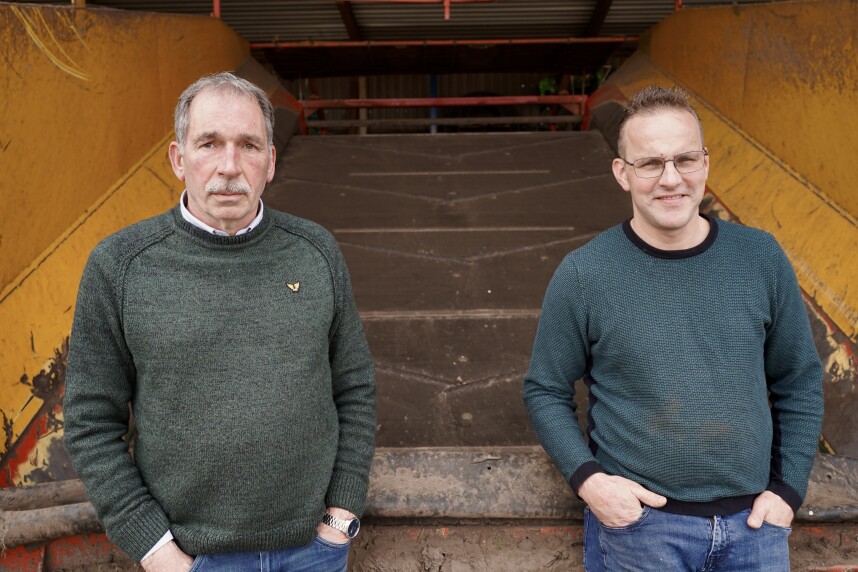
From spot to preventive
Initially, Van der Velde treats on a spot-by-spot basis; This year he uses both products preventively. "I saw positive results from the first moment and was enthusiastic. When sowing I use the granulate form, after emergence 10 liters Nemater en Stimuler liquid, and then I inject on a two-week cycle.”
Van der Velde sees a rapid development of biostimulants. "It's about the resilience of the plant. Less chemistry is a good goal, but it also requires a different way of working." Muller calls it a process of continuously assessing risks. "What do you do preventively and what do you let it happen? And the preconditions have become more important, because they have to be right."
Text & image: Rik Leonards