Analysis Arable
Artificial fertilizers are not keeping pace with the malaise in arable farming
The wheat market is in a downward spiral, onions have seen some price increases, and free-range potatoes are practically impossible to lower than their current level. The fertilizer market is unfazed by the subdued prices for key arable products. Prices for commonly used fertilizers are significantly higher than a year ago.
Read this article?
Become a subscriber and get instant access
Choose the subscription that suits you


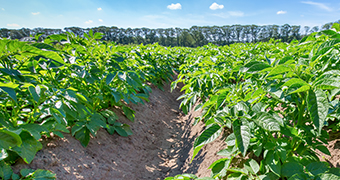
There's certainly no sign of jubilation among most Dutch arable farmers. Prices for produce are under considerable pressure, but cultivation costs are holding up relatively well. A first sign that costs won't change much for the coming growing season is fertilizer prices. Ordering a shipment of greenhouse gas from the advance payment for wheat is considerably more expensive than last year. The price of greenhouse gas is approximately 20% higher than this time last year. The price difference for potassium is less extreme, but even here, we're talking about a price increase of just under 4%.
The higher fertilizer prices are partly due to geopolitical tensions. Europe is particularly dependent on Belarus for potassium. Since the war with Ukraine, relations with Alexander Lukashenko's regime have certainly not improved.
For the production of nitrogen fertilizers, producers often cite the gas price as an indicator of the price of artificial fertilizers. However, this hasn't held true in recent months. Natural gas on the TTF is euros lower than this time last year, but as mentioned, greenhouse gas is 20% more expensive than a year ago.
The problem of relatively expensive fertilizer isn't unique to the Netherlands or Europe. Grower associations in the US are also raising the alarm about the high prices. The price of grain corn has halved from its peak in 2022 at $8 per bushel to $4 per bushel, but input prices have remained roughly the same, Krista Swanson, chief economist for the National Corn Growers Association (NCGA) and an Illinois farmer, told Agweb. "The USDA calculates the production costs for various crops, including corn. Those costs for 2025 and 2026 are virtually the same as in 2022." According to Swanson, fertilizer accounts for approximately 40% of the costs directly attributable to corn production.
Producers benefit from it
The current fertilizer market is proving very profitable for fertilizer manufacturers. Yara, a major player in the European market, saw its gross profit (EBITDA) increase by 2025% in the second quarter of 27 compared to the same quarter a year earlier, reaching $652 million, the company announced last month during its quarterly results presentation. Its North American counterpart, Nutrien, saw revenue grow by 2025% in the second quarter of 3, reaching $10,4 billion. Gross profit (EBITDA) rose by 11% compared to the same quarter a year earlier, reaching $2,5 billion.
Experts don't expect a quick turnaround in the fertilizer market. Geopolitical tensions aren't easing. In fact, the White House has ratcheted things up a notch in recent months with trade tariffs. In Europe, market protection for fertilizer producers is also a factor. Given their strategic importance to food production, fertilizer manufacturers have successfully advocated for European trade restrictions on cheaper fertilizer, primarily from Russia but also from the US.