Interview Cynthia Zhu
'AI adoption important to maintain leading position'
Artificial intelligence (AI) is everywhere in our lives and work. Whether it concerns ChatGPT - the model that can (with varying degrees of success) let you 'think along' about everything and, for example, write e-mails and software code - or applications in agricultural machines that recognize deviations in crops. Cynthia Zhu is researching the use of AI in agriculture for her MBA at the University of Amsterdam. The results will be available early next year, but... Boerenbusiness Zhu already delves into the subject.
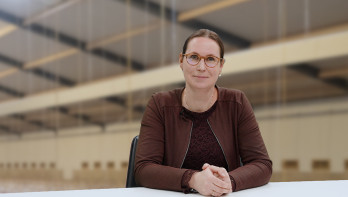
Cynthia Zhu advises agribusiness in both the Netherlands and China, particularly in the areas of strategy and innovation. In addition to her work as an independent consultant, she is doing an MBA in this field at the University of Amsterdam, specializing in artificial intelligence. Her graduation research focuses on 'AI in agriculture'.
How do agricultural companies view artificial intelligence? Do they find it valuable? How easy do they find it to use and do they intend to use AI applications (more)? These questions are central to Zhu's graduation research. "In the business world, intention is very important. There is still a big gap between intention and reality, but the first step is always that you want to use it."
Why did you choose this topic?
"Agriculture is very important for food security. I have been working in the agricultural sector in China and the Netherlands for more than ten years and have also worked in telecom for a few years in between. What you now see in the agricultural sector in terms of digitalization and innovation, I saw that in the telecom sector ten years ago."
Is AI already widely applied in agriculture?
"Not very much yet. There are companies actively working on it, but these are often a kind of pilot projects. It will take a while before it becomes large-scale. Besides the fact that there are few projects, the results are sometimes not good. Many companies are still not completely satisfied and that is why, I think, they are also reluctant."
Can you name a number of concrete examples where AI is applied?
"Bakker Barendrecht, a subsidiary of Greenyard, which supplies fruit and vegetables to Albert Heijn, uses AI to check the quality of the products and determine how long they remain fresh. AI can trace all processes and thus determine the correct time to harvesting and how long fruit and vegetables can be stored."
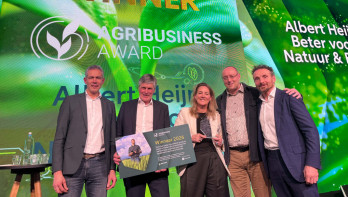
"The winner of the Agribusiness Award (BB Leap with their plant-specific spraying technique with camera ed.) uses supervised learning, where the algorithm trained to recognize where to spray."
There is a gap between the intention to use AI and the adoption. Is there an explanation for that too?
“There are a few reasons for this. One is that many companies think: OK, but how am I going to do it and do I have the people who can do that? They do have an IT department, but it is not focused on AI and implementing changes in an organization is very difficult. Secondly, companies ultimately want to use AI everywhere, but where do you start, where can they use it now? You have to dare and have the knowledge in-house. Thirdly, AI is not one kind of tool. The people from top management really have to translate what they want to achieve in order to achieve that. The activities of many companies are complex, so you have to determine where the most opportunities lie."
Initial results show that CEOs (like women) are more willing to use AI. Is that important?
"People are very willing to use AI, but may not know how. The willingness of CEOs is very important, but in the Netherlands you have very flat organizations with little hierarchy, so you have to convince the entire team. Another cultural difference with China: The Chinese love new things and technology. They want to use them immediately. In the Netherlands it is more like: that is new, so keep your distance. It is typically Dutch to first see what the competitors are going to do with it and try from other companies I see that as a risk. You cannot simply copy AI applications one-on-one. An AI tool is a framework in which your data is important. A leading company can become very large, the winner takes it all."
"The design process of applications, software and models is very complex. But once designed, mass production becomes extremely simple and the marginal costs are zero. This happens more often at large tech companies, with Apple and Google as good examples."
Experts say the biggest steps will be taken in the next ten years. Are we still at the beginning?
"They say that we are in a kind of interim period, in which AI is being applied here and there. Not yet systematically, but ad hoc. Many companies are still unsure about it. Really making money from it has yet to come. First, people have to see that it creates value and then they start using it more."
The Netherlands has technologically high-quality agriculture. How does the Netherlands remain a leader with new developments in artificial intelligence?
"That is a very good question. I am also a bit concerned about that. The Netherlands is still the leader, but it is very important that the Netherlands adopts AI and optimizes knowledge in order to remain in that position."
During the presentation of the Agribusiness Award you gave a lecture about AI. Then Twan Claessens of Piglets Treatment Systems, last year's finalist, said that his company is faced with the problem that data is not shared in the Netherlands. How important is data input for the proper application of AI?
"That is actually a danger in Europe. A solution must be found so that companies can work together. Large companies have a lot of data. A FrieslandCampina or Lely has enough data, they collect a lot and have a strong position. Small companies have their own unique data, but still do not do enough with it. An individual farmer creates little or no value with his data. You have to build a new organization and ecosystem to share data that is secured with each other. I see organizations that are working on that but more with who owns the data. Really creating value with it has yet to come and requires a better business model."

Linda van Eekeres
© DCA Market Intelligence. This market information is subject to copyright. It is not permitted to reproduce, distribute, disseminate or make the content available to third parties for compensation, in any form, without the express written permission of DCA Market Intelligence.