Dutch Crop tour Weather - week 32
Northerner has no idea how dry it is
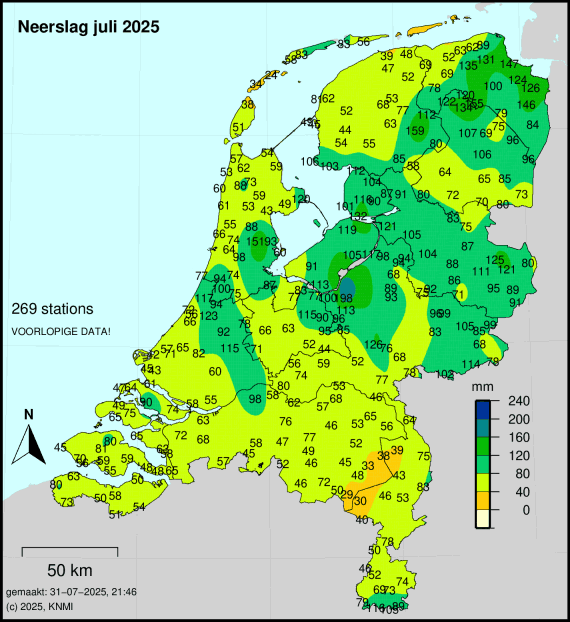
At 72 millimeters, the average rainfall in July is just below the long-term average. The national figure says little about the situation per grower, as there are significant differences within the Netherlands. While some regions benefited from favourable growing conditions thanks to heavy downpours, other parts of the country remained quite dry. Some growers had to wait a long time for a refreshing shower.
Some parts of the country may have already forgotten, but at the beginning of July, it was still very dry in the Netherlands. It was not only dry, but also very hot around the start of the month. Under the influence of a high-pressure system, our country was caught in a very warm, tropical airflow at the beginning of July. On July 1st, temperatures rose above 30 degrees Celsius everywhere, with peaks of over 35 degrees Celsius in the southeast. Wheat ripening accelerated. The first wheat was harvested on July 1st, and in the second week of July, the grain harvest burst into life in the southern Netherlands. Thanks to a sufficient number of consecutive dry days, the majority of the wheat in the southern Netherlands was harvested. A rough estimate is that around 90% was threshed.
Draft came in
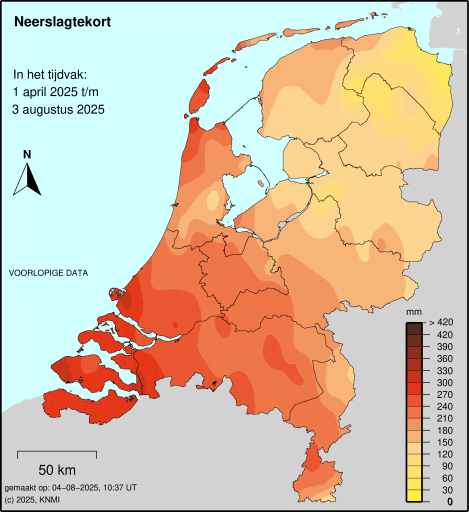
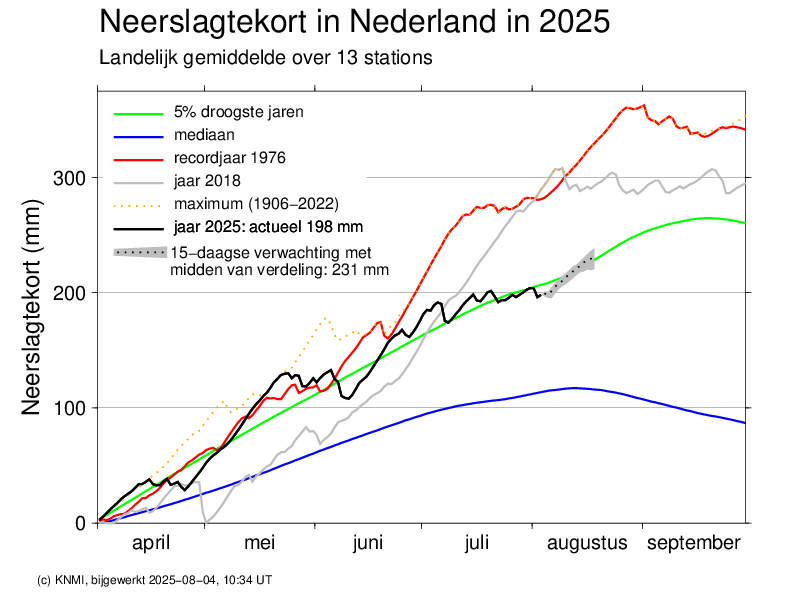
The last two weeks of July saw a significant downturn, particularly in the northern Netherlands. The grain harvest was about to begin, but precipitation disrupted, and continues to disrupt, the plans. This marked the beginning of a divide within the Netherlands. The northeast and east of the country, in particular, experienced heavy rainfall. In many places, more than 100 millimeters fell, with local peaks of 120 to 150 millimeters. In contrast to the northeast, the northwest, southwest, and southeast remained dry again, with only 30 to 60 millimeters falling in many places. The average precipitation deficit across the country stabilized at around 200 millimeters due to the wetter periods. This means that 2025 will still hover around the line of the 5% driest years since records began. However, regional differences are very large: in the southwest, the deficit increased further to around 300 millimeters, while in the far northeast, it was still below 100 millimeters at the end of July.
End of the month growing weather
Despite the differences, rain fell in the Netherlands during the same period. This resulted in typical Dutch summer weather nationwide: precipitation with moderate summer temperatures, wind, and interspersed sunshine. This type of weather was especially welcome for growers in the south, where it extended crop growth somewhat. From the moment of sowing and planting, it was extremely dry, especially in the southern Netherlands. The recent rain is therefore more than welcome, as it has finally allowed the potatoes and onions to grow somewhat nicely.
Due to the early sowing and planting dates, the crops are growing ahead of other years. A large number of seed onion plots are starting to bear or have already. The onion sets haven't quite finished yet, but the first seed onions are ready to be harvested. Some settled weather would be welcome for the onion harvest, just as it is for the grain harvest.
Meanwhile, potatoes are thriving in the Dutch summer weather. However, the crop is aging relatively quickly. Calculated in terms of the number of growing days, there's nothing to worry about, but at the beginning of August, we're used to most plots with potatoes for storage still looking a bit fresher. The plots planted later are generally still looking more vigorous, as you might expect, but they still need to produce a good number of kilos. It remains to be seen how those potatoes will hold up when we get drier, but especially warmer, weather starting in the second half of this week.

Jan Willem Veldman
© DCA Market Intelligence. This market information is subject to copyright. It is not permitted to reproduce, distribute, disseminate or make the content available to third parties for compensation, in any form, without the express written permission of DCA Market Intelligence.