Analysis Grains & Commodities
Drought continues to affect the grain market
The grain market is struggling to choose a clear direction. In Europe, the wheat price is under some pressure due to news from North Africa, among other things, while in the US the market is looking up due to challenging conditions for winter wheat. Soy yoyoed up and down, almost making up for the loss from a day earlier.
Would you like to continue reading this article?
Become a subscriber and get instant access
Choose the subscription that suits youThe March contract for wheat on the Matif closed €2,25 lower yesterday, reaching €283 per tonne. On the CBoT, wheat, on the other hand, was on the rise, closing 0,2% higher at $7.61 per bushel. Soybean also rallied after yesterday's decline, closing 1% higher at $15.34¼ per bushel. Corn was down on the Chicago stock exchange, dropping 0,8% to $6.75¼ per bushel.
The tender from the Egyptian state purchasing agency GASC may play a role in the lower closing of wheat yesterday. According to sources, the lowest bid on the tender was $322,80 per tonne C&F (carried out). That is more than $10 lower than the previous tender that GASC issued. That does not mean that the wheat is $10 cheaper. The decreased costs for bulk transport are at least as important, according to some analysts.
Dry
Lack of precipitation is currently supporting the US wheat market. The winter wheat acreage may have grown by 11% compared to the previous season and is the highest level in eight years. However, that does not automatically mean that the harvest will also be larger. Large parts of the southern prairies are experiencing the worst drought in years. In large wheat states such as Kansas and Oklahoma, winter wheat is certainly not doing well. And although it is still very early in the growing season, several analysts already assume that the poor start due to late sowing, extreme cold around Christmas and a lack of moisture will cost yields.
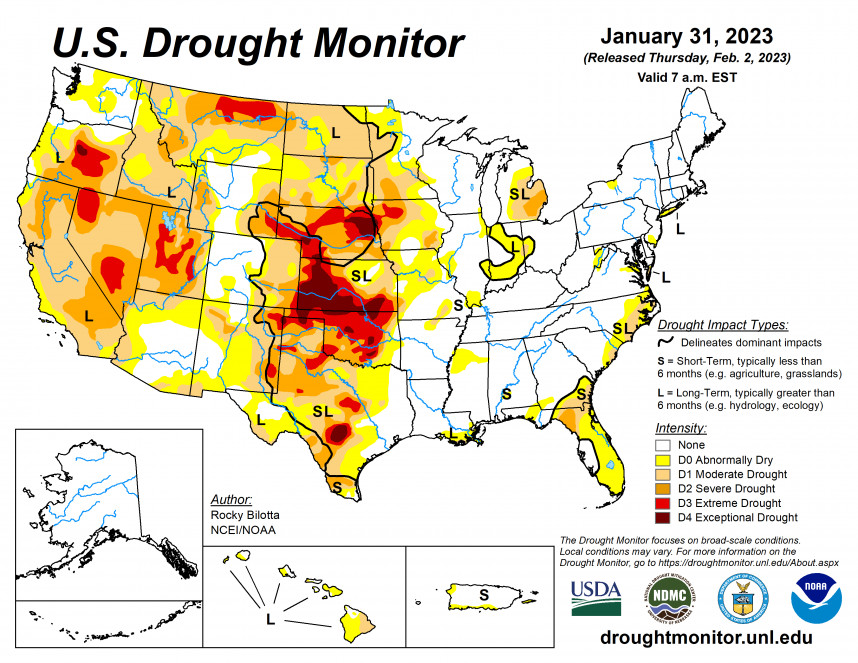
Drought also continues to cause problems in Argentina. The recent rain is doing something, especially for soy, but the leak is certainly not over yet, the Buenos Aires grain exchange warns in the weekly market update. The condition of soy in Argentina has improved compared to last week, but 46% of the area is still rated poor or very poor, compared to 54% a week earlier. The cards are shuffled differently for Brazilian farmers. Rain is forecast in the central west and south. The precipitation just comes a little too early for the beauty. The combines drive and behind them follow the maize sowing machines for the subsequent cultivation of maize. The rain is favorable for corn, but it would be better to remain dry for a while for the ripening and harvest of soy.