Analysis Grains & Commodities
Russia and Iran seek each other out in wheat trade
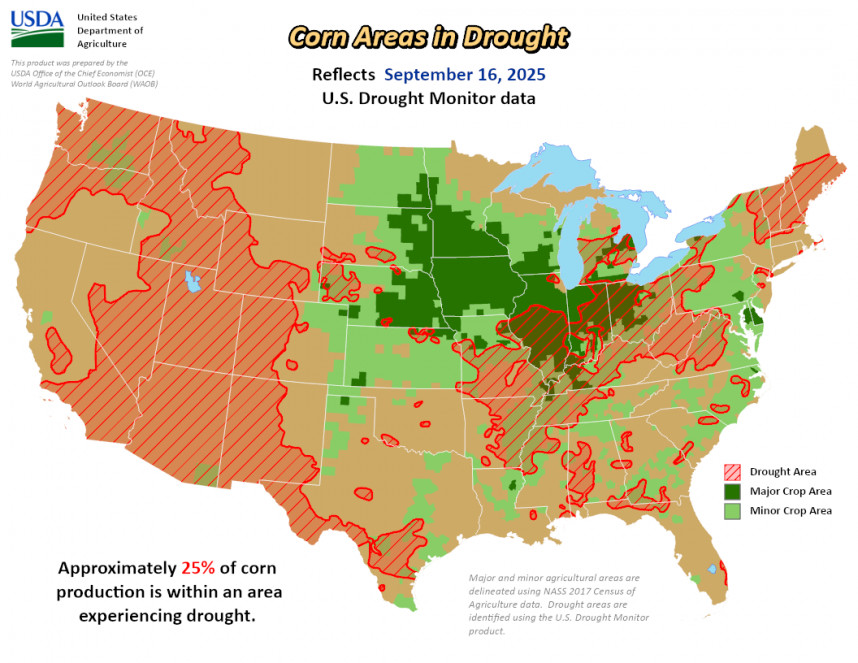
Global wheat demand remains a hot topic. Russia has seen some positive news in this regard. Iran bought a substantial amount of Russian wheat this week. The EU could also use some extra demand. According to Coceral, the European wheat harvest is the largest in 10 years. Drought is becoming a problem in the US. According to various reports from the field, maize yields are disappointing after record harvests were expected for a long time.
Would you like to continue reading this article?
Become a subscriber and get instant access
Choose the subscription that suits youThe December wheat contract on the Matif closed unchanged yesterday at €192,25 per tonne. On the CBoT, wheat closed down 4 cents at $5.24¼ per bushel. Corn fell 3 cents to $23¾ per bushel. Soybeans were the biggest loser on the Chicago exchange during the last trading session, down 6¼ cents to $10.37½ per bushel.
The European grain sector association Coceral has revised upward its forecast for the European wheat harvest. According to Coceral, 147,4 million tons of wheat have been harvested in the EU plus the UK. The previous estimate from July was 143,1 million tons. This makes the 2025 wheat harvest in the EU the largest in ten years.
Larger wheat harvest
The International Grains Council (IGC) also released a harvest estimate yesterday. They raised the global wheat harvest forecast by 8 million tons to 819 million tons. This increase is due in part to better yields in Russia and Canada and a relatively favorable growing season in Australia. Wheat consumption has also increased by 3 million tons to 819 million tons. The final wheat stock is estimated at 270 million tons. The ICG has lowered the corn harvest forecast slightly by 2 million tons to 1.297 million tons.
With such large wheat harvests, there seems little doubt about the continued competition on the global market. However, there was a glimmer of hope yesterday. Some sources report that Iran purchased much larger volumes of wheat from Russia this week than previously expected. Precise figures are unavailable, but Iran reportedly purchased between 0,5 and 2,0 million tons of wheat from Russia. All of this is expected to be shipped in the fourth quarter of this year.
Drought is becoming a problem in the US
Drought is now truly starting to take hold in the US. Twenty-five percent of the corn acreage is now in drought conditions, compared to 12% last week. For growers whose corn was already more or less ripe, this isn't a problem. In fact, dry weather there is likely only beneficial for threshing. However, a significant portion of the corn hasn't yet fully ripened and would still need some moisture to produce its final kilos. That's not available, causing the crop to become overripe.
The corn situation in the US is somewhat reminiscent of the potato situation in the Netherlands. The growing season was quite favorable, and yield expectations were good to very good. Now that harvest is underway, it's becoming clear that expectations may have been too high. A crop failure is certainly not the case, but neither is breaking records everywhere.
Where records will be broken is in Brazil. At least, that's the forecast from the Brazilian government institute Conab. The corn acreage in Brazil will expand by 3,2% in the 2025/26 season compared to the previous season, to 22,6 million hectares. According to Conab, the total harvest will reach 138,3 million tons. This would represent an average corn yield of 6,1 tons per hectare, a record. The USDA uses the same acreage but arrives at a corn harvest of 131 million tons. That's 5,8 tons per hectare, which some analysts consider more realistic.