Inside: Milk & Food
China for milk market or not chicken with golden eggs?
During the second half of 2016, the white engine in the European Union picked up steam again. In January, the interim position can slowly be drawn up and China appears to have imported the largest volume in milk equivalents since 2012, but China may or may not be the proverbial goose that lays the golden eggs for the Dutch dairy market.
Read this article?
Become a subscriber and get instant access
Choose the subscription that suits you


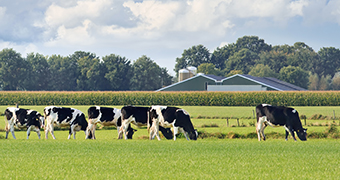
The extra liters do not mean that it has been a good year for Chinese dairy farmers. For example, lower prices on the world market put great pressure on milk prices. China has a relatively high milk price, but this is also necessary because of the costs incurred by dairy farmers. In 2013, just under half of all dairy farms were located in the northeast of the country, spread across Inner Mongolia, Heilongjiang and Hebei.
At the beginning of 2017, things started to get a little easier, because world market prices have risen. This makes domestic products competitive again, which gives the prospect of a recovery in the milk price. However, it is still early days for that.
Despite the extra liters of its own milk, China imported more dairy products again in 2016, after a dip in 2015. It appears that stocks have been cleared in 2015 to the extent that there was room to import more. A small point of attention is that China's policy to get more and more people into the city has changed again. The focus is now back on encouraging rural settlement. Less dairy is generally consumed there. Which can lead to a drop in demand.
Prices have fallen steadily since 2014, which automatically means that more must be exported to earn the same from dairy. For example, the Chinese imported 2016 tons more dairy in 20,4, but they only paid 11,8 percent more for it. In percentage terms, condensed milk was the profit winner. The absolute volume increased by 82,9 percent to 20.013 tons, while the value increased by 62,2 percent to $ 36,45 million.
When the value of the products is compared to the volume, it appears that cream is the only product that writes green figures. Both volume and price sales increased, meaning the bottom line result is clearly in the green. Unfortunately, cream only accounts for 3,7 percent of total imports.
The smallest decrease is attributed to the import of drinking milk. This manufacturer accounts for just under a quarter of imports. Less was earned on milk per ton than in 2015. In terms of volume, whey is the second product, followed by whole milk powder. Both products earned between $274 and $295 less per ton. But it is the caseinates where the largest decline can be recorded.
Meanwhile, the European Union (EU) was able to increase the volume in milk equivalents to 1,06 million tonnes. Just half a percent more than the record of 2014. In the meantime, the milk pool in the EU has grown much more and it appears that exports have not been able to keep pace with the increase in production.
Which raises the question of whether China is the goose that lays the golden eggs? China gets by far the most milk equivalents from New Zealand. This has been the case since 2012. Something that is further boosted by a free trade agreement between these two countries. Something the EU does not have and is not talked about. Attempts are being made at company level to strengthen ties. At country level, the Irish in particular are busy opening up this market.
It is certain that, based on demand and its own milk production, China offers sufficient space for European dairy products, but more action is needed than is currently being taken. Until then, it is more of a mirage and not an argument for producing more milk in the EU.