Inside Milk
Drought is disastrous for Australian fanciers
Dairy farmers in Australia are suffering from the ongoing drought. Although regional differences are large, feed prices are rising everywhere. For the first time in 20 years, total Australian milk production will remain below 9 billion kilos.
Read this article?
Become a subscriber and get instant access
Choose the subscription that suits you


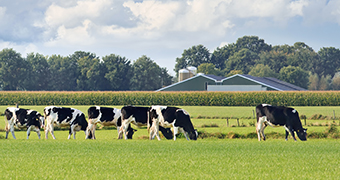
The Australian milking season runs from July 1 to June 30. Although this is only just over half, it is already clear that the production limit of 9 billion kilos will not be achieved. In 2002, total milk production in Australia was a record 11,1 billion. However, in 2017 production amounted to 9,19 billion, which represents a decline of approximately 7% in recent years.
Australia is a large country and situations obviously differ per region, but on average it can be said that dire and that dairy farmers and the dairy industry are increasingly feeling the consequences.
No rain for over 5 years
Southern Victoria is the state in which 65% of Australia's milk production takes place and the drought is particularly persistent in the northern part of this state. In some regions no rain has fallen for about 5 years. And the rain that did fall fell in the winter months instead of in the spring and summer.
Many Australian dairy farmers are therefore opting to reduce their livestock. A decline of 5% to 20% in dairy cattle is currently the rule rather than the exception. In total, Australia has approximately 1,5 million dairy cows, spread over approximately 5.500 professional dairy farms.
Although official figures are lacking, the number of dairy farmers who have quit is also higher. Their farms are sold, but often not used for keeping dairy cattle. “Until a few years ago, 6 out of 7 dairy farms sold in Western Victoria continued in this sector, now it's just 1 in 7,” says Simone Smith, who worked as a journalist for the Weekly Times in Melbourne for 10 years. "Several dairy farmers from the northern part of the state are seeking refuge in the south. The drought has hit less hard there."
In regions where rain has fallen regularly in recent years and feed has continued to grow, such as parts of western Victoria, Tasmania and South Gippsland, dairy farmers are equally affected by increased prices for grain, hay and water. Logically, irrigation has become much more difficult and water rights are more expensive due to the persistent drought in large parts of the country.
Export share remains stable
The Australian dairy cow produces largely on a grass ration. The average milk production per cow is just over 6.000 kilos per year. The country exported 36% of its milk last year in the form of cheese, powder and other dairy products. In recent years, exported dairy has made up about 6% of the total supply on the world market. In the year 2000 this was still 16%.
Despite the clear decline, Australia is a modest but not insignificant player on the world market. Exports have hardly declined in recent years, as John Droppert of Dairy Australia knows. "Private factories imported more cheap dairy products last year to supply the domestic market. In this way they maintain exports to continue to offer the same products and volumes to high-paying customers in Asia. That means that our share of the world market increased from 2000 to 2 was slowly declining a year ago, because more milk was previously traded on the spot market. As it became less profitable, it decreased."
Milk prices have barely increased
An important remedy in times of extreme drought is a better milk price. However, that hardly ever happens. Last milking season, the average milk price in Australia, with a difference of a few cents per region, was €29 per 100 kilos. "Some dairy farmers are now being offered substantially better contracts for the next six months."
"The shortages are visible in the market, but it still concerns a small proportion of farmers who receive better milk prices," says Droppert. "It will be exciting to see how this develops in the coming months. It may be that the milk supply remains low for (even) longer, which means that prices will have to rise. This is because demand is stable and dairy factories want to continue to supply their customers well on the domestic market."