News milk
Fractionally less milk in 2023, slightly more export
The European Commission foresees declining dairy prices this year, slightly lower milk production, slightly lower sales in the EU and cautiously recovering exports. These forecasts represent a short-term outlook for the agricultural markets.
Read this article?
Become a subscriber and get instant access
Choose the subscription that suits you


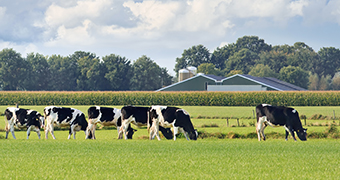
According to the Commission, lower milk production in the EU as a whole is caused by increasing cow slaughter. This is due to falling milk prices and partly due to good beef prices.
Dairy herds are declining more than milk production
The dairy herd is expected to decrease by 1%. Milk production also decreases, but to a more limited extent. The Commission currently assumes 0,2%. This is because many dairy farmers may increase production per cow to make up for the loss of income due to lower milk prices.
What the Commission mentions are all very limited percentages and associated volumes, but that is the tone of the outlook. It is also difficult for the European Commission to make a good forecast, which is why the necessary measures are being taken.
More milk in cheese tray
The Commission expects the supplied raw milk to go into the cheese bin slightly more often than last year, because cheese is slightly more profitable than butter and milk powder. Moreover, cheese sales are also quite stable. The Brussels experts also expect 2% more cheese exports.
The picture is slightly less promising for butter and milk powder. The export of this is more difficult and some stocks were built up last year. However, the extent of this is still within normal limits, it is stated. A recent report of the European Milk Market Observatory confirms this.
China missed out on powder market
For the milk powder market as a whole, it would be very helpful if China returns to a purchasing pattern that has been more or less normal in recent years, the committee notes. The import of whole milk powder in particular has been sharply reduced, which, for example, caused New Zealand to produce more skimmed milk powder and thus provide additional competition to Europe. In Brussels the expectation and perhaps especially the hope is that this will change again in the coming year. The Commission is already predicting an increase in skimmed milk powder exports of 8% compared to last year, but cannot yet substantiate this assumption very strongly.

Sales of fresh dairy products in the EU itself will decline again this year, more or less in the same pattern as in the years before the outbreak of Covid-19.