News Milk
European milk production is heading for a break in the trend
The European Commission predicts that the number of cows in the European Union will fall by 2035% by 13, compared to the average size between 2021 and 2023. This is due to stricter environmental legislation in several Member States. Production per cow continues to increase, but the growth rate is decreasing.
Read this article?
Become a subscriber and get instant access
Choose the subscription that suits you


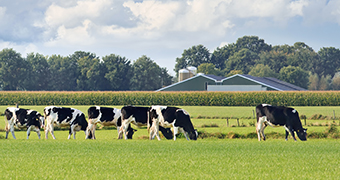
This is evident from the most recent EU Agricultural Outlook of the European Union. The consequence of the shrinking dairy herd is that milk production will decline. This would be a break in the trend, because growth figures have continued to be seen in recent years. The expected decline is, however, moderate. The report states that milk production will decline by 2035% annually until 0,2. Globally, milk production will continue to grow until 2035, at around 1,6% per year. Especially in India and Pakistan, but also in the United States. Stable production figures are expected in New Zealand.
Global growth
Despite increasing milk production in many countries, global dairy imports continue to grow. The expected growth of 2% per year is considerably lower than the 4% increase in recent years. This is partly because the Chinese demand for dairy is not increasing further, now that population growth is stagnating. The declining growth has a particular impact on the milk powder market. Cheese and whey powder sales will probably remain stable, while European butter sales may increase.
The EU and New Zealand remain the largest dairy exporters with 24% market share each. European export volumes are likely to remain stable, despite the expected contraction in milk production.