Opinions Joost Derks
This is how the Fed kicks Wall Street down
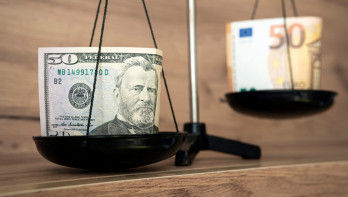
Stock and currency traders pay more attention to what the US central bank (Fed) is doing than saying. In any case, for the time being, the Fed has chosen not to curb the turmoil in financial markets.
The American central bank slightly lowered its forecast for 19 economic growth on Wednesday, December 2019. Inflation is also likely to be somewhat lower in the new year than it had appeared. This is reason for Fed Chair Jerome Powell to take an advance on a small interest rate hike in 2019.
The bank is aiming for 2 interest moves. A few months ago there seemed to be 4 more. The cautious outlook did not prevent the dollar from rising after the meeting, while stock prices fell. On Wall Street, a gain of over 1% turned into a loss of 1% in just over 2 hour. The Dow Jones Index even closed to its lowest level in more than 1 year.
Actions rather than words
The fierce reaction is caused by traders paying more attention to what the Fed is doing than what Powell is saying. The bank raised the interest rate to 2,5% and that was already the fourth increase in 2018. This makes the difference with Europe large. The European Central Bank (ECB) has kept interest rates at 0% for years and chairman Mario Draghi has warned that an increase may not be discussed until the summer of 2019. In addition, Powell has announced that he will continue to scale down the massively expanded Fed balance sheet.
The latter means turning off the money tap. This makes it more difficult for large investors to get money, so that these players are less inclined to take extra risks. The prospect of a shrinking balance sheet indicates that the turmoil in financial markets could continue in 2019. As a result, the safe havens are in demand; these include the Swiss franc, Japanese yen and US dollar. The US currency also has the wind at its back from the relatively high and expected rising interest rates.
The year of the dollar?
Will 2019 be the year of the dollar again? That chance seems small. If the panic in financial markets increases, interest rate hikes are suspended so that a tailwind disappears behind the currency. In addition, the relative popularity of the dollar is also caused by the uncertainty in Europe. The Italian budget crisis has now been calmed and it will be clear by 29 March at the latest what Brexit will look like. Would yellow vests then throw a spanner in the works?
For now, however, the most likely scenario is that the impending interest rate hike in Europe and the easing political uncertainty will cause the euro to regain some ground on the US currency.

Joost Derks
© DCA Market Intelligence. This market information is subject to copyright. It is not permitted to reproduce, distribute, disseminate or make the content available to third parties for compensation, in any form, without the express written permission of DCA Market Intelligence.
- 1.Extremely high prices for phosphate rights
- 2.Avebe raises potato price after all
- 3.Vion reports another heavy loss
- 4.Red diesel allowed again in the US
- 5.Arable Farming Market Quarter: October
- 6.Higher milk price at Hochwald
- 7.Euro significantly weaker against dollar
- 8.Ample supply puts pressure on cattle prices