Opinions Joost Derks
Will the franc recover after a false start in 2024?
The Swiss central bank has unexpectedly reduced its already low policy interest rate slightly further. This accelerates the slide of the franc. However, the picture can change very quickly if the financial markets explode.
There are few countries whose financial sector has a more sound and reliable image than Switzerland. In addition to banking secrecy and the size of the financial sector, this is partly due to Swiss neutrality. Because the country has not been invaded by wars for centuries, it has an image as a safe place to keep savings and other valuables. Even when Credit Suisse suddenly went under in 2023, it barely made a dent in that image. It was largely due to decisive action from the central bank that this became a small ripple rather than a big splash.
on the wrong foot
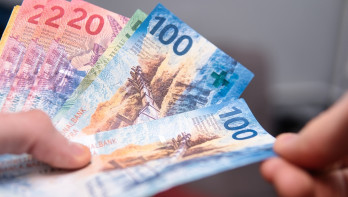
By cleverly pulling strings behind the scenes, the Swiss National Bank (SNB) paved the way for UBS to acquire Credit Suisse's activities quite quietly. In other respects, however, the SNB is much more demanding of a place in the spotlight. At the last minute of spring, for example, the bank put the entire financial world on the wrong track by lowering the policy interest rate from 1,75% to 1,5%. This makes Switzerland the first country in the G10 where interest rates are taking a step back after the sharp rise in recent years. The surprising move was felt on currency markets. The franc fell 1% against the euro within minutes.
Without warning
It is not the first time that a decision by the SNB has had a major impact on the currency world. The best example came at the beginning of 2015. At the time, the bank dropped the ceiling of 1,20 francs per euro overnight without any warning. This caused the currency to rise by almost 20%, so that the franc was even worth more than a euro for a while. After that first shock, the franc lost some ground again, but since the summer of 2022 the exchange rate has been above 1 euro again. At the beginning of this year, the franc even reached a record rate of 1,07 euros. This was mainly due to its role as a safe haven. When tensions increase on financial markets – for example due to the flare-up of fighting in the Gaza Strip and the Houthi attacks in the Gulf of Aden – many parties opt for the safety of the franc.
Disaster year for the franc?
However, as other central banks took a back seat in recent months, attention has recently shifted more to interest rate developments. With inflation that, according to the SNB, will amount to 2024% in 1,4 and only 1,2% next year, there is room to reduce the policy interest rate even further. In the short term, the franc will continue to suffer from this interest rate headwind. But that picture could change if other central banks also signal the start of a new interest rate cycle with an interest rate cut. Because interest rates there could fall much further and because the franc is still an important safe haven, the weak start is not automatically the prelude to a disastrous year for the franc.

Joost Derks
© DCA Market Intelligence. This market information is subject to copyright. It is not permitted to reproduce, distribute, disseminate or make the content available to third parties for compensation, in any form, without the express written permission of DCA Market Intelligence.
- 1.Ample supply puts pressure on cattle prices
- 2.Interest rates on capital markets are rising
- 3.Off-land period weak spot in market
- 4.Euro significantly weaker against dollar
- 5.Rising onion market shows cracks
- 6.The sow population in the EU is not yet shrinking.
- 7.French fries exports impress
- 8.Onion exports picking up pace